

When news breaks about tensions in the Gulf, property investors get nervous. It’s a natural reaction. Nobody wants to put money into a market that might face serious problems.
But here’s what actually happens in Dubai when regional issues flare up. The data tells a different story than you might expect.
Geopolitical Tensions Dubai Property Market Shows Short Term Dips
Late February 2026 brought exactly this scenario. Regional tensions spiked. Investors paused. The immediate reaction was predictable.
Property viewing appointments dropped 45% in the first three days. People stopped looking at homes. Brokers reported quieter offices. Some buyers put decisions on hold.
This happens every time. When uncertainty rises, people wait. They want to see what happens next before making big financial moves.
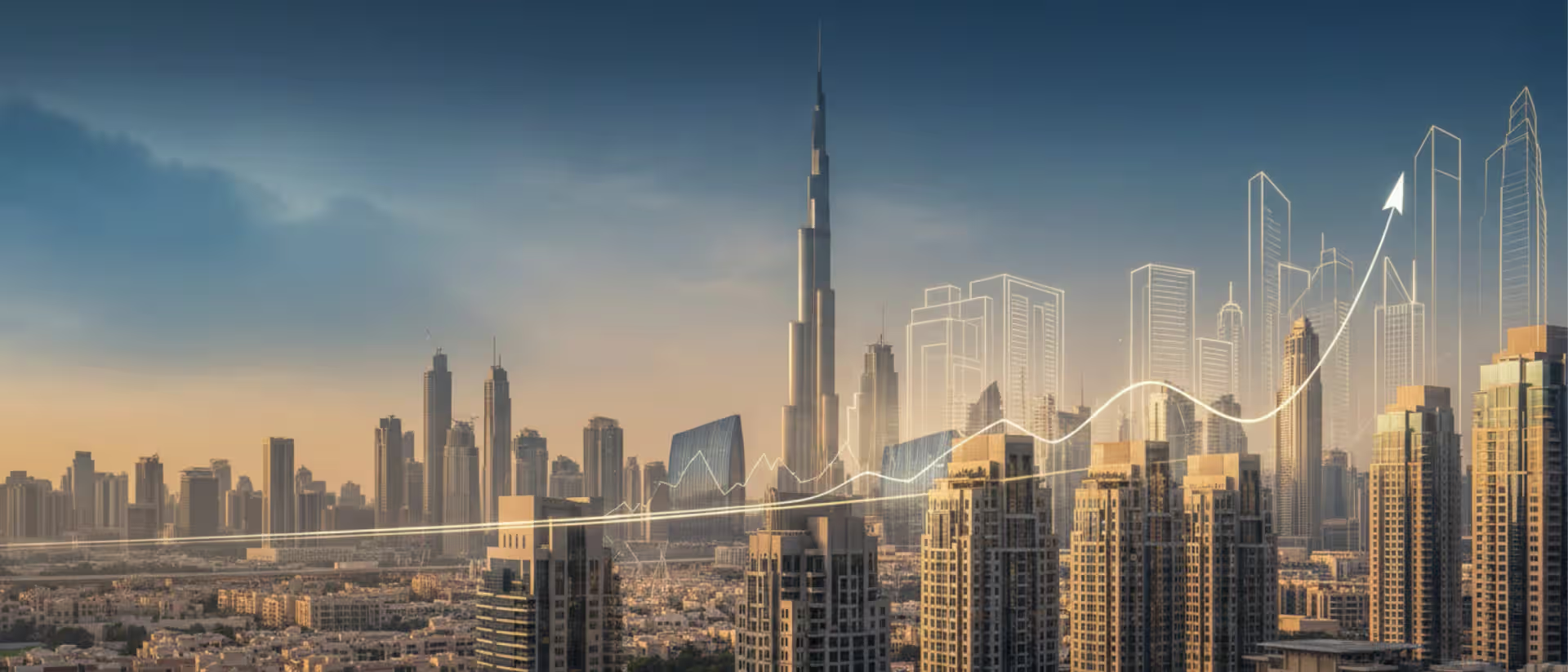
But something interesting occurred within the same week. Activity bounced back fast. By the end of week one, viewings jumped 75% compared to those first three days. Investors who initially paused came back. New buyers appeared looking for opportunities.
The Dubai property market has seen this pattern before. Initial shock creates hesitation. Then fundamentals pull buyers back in.
Dubai Real Estate Resilience Comes From Actual Numbers Not Just Talk
Let’s look at what the market actually did during recent tensions.
Transaction volumes dipped for about a week. Then they recovered to normal levels. By mid March 2026, the market was processing similar volumes to the weeks before tensions started.
Property prices didn’t crash. They didn’t even drop significantly. Most segments held steady. Some luxury deals continued without pause.
On March 4th, right in the middle of heightened concerns, an apartment at Aman Residences sold for AED 422 million. That’s not the behavior of a market in crisis. That’s confidence.
Off plan sales maintained their usual 62 to 66 percent share of the market. Developers kept launching projects. Buyers kept reserving units. The machinery of Dubai real estate kept running.
Compare this to stock markets in the region. Those saw serious sell offs. Equities dropped hard when tensions rose. But physical property? It barely blinked.
Why the difference? Property investors think differently than stock traders. They focus on longer time frames. They look at fundamentals more than headlines.
Market Fundamentals Supporting Dubai Stability Beat Short Term Fear
Here’s what matters more than headlines.
Dubai has diversified its economy significantly. Oil represents less than 1% of GDP now. The city runs on tourism, trade, finance, real estate, and services. Regional oil issues don’t directly impact Dubai’s core economy the way they might have 20 years ago.
Infrastructure investment continues regardless of regional situation. New metro lines, roads, airports, and developments keep progressing. Government commitment to growth doesn’t pause for geopolitical uncertainty.
Rental yields in Dubai average 6 to 8 percent. Compare that to London at 3 to 4 percent or New York at 4 to 5 percent. Those yields attract investors even during uncertain periods because the returns justify the perceived risk.
The city now hosts over 81,000 millionaires. That number doubled since 2014. Wealthy individuals keep choosing Dubai as a base. They understand regional dynamics better than outside observers and they keep investing.
Transaction Activity Analysis Dubai Property Shows Fast Recovery Pattern
Every time tensions rise, the same pattern repeats.
Week one sees hesitation. Buyers pause. Activity drops. Media coverage intensifies fears. This is the moment casual observers think the market might collapse.
Week two shows stabilization. People realize life continues. Businesses operate normally. The city functions without disruption. Buyers start returning.
Week three and four return to normal activity levels. Sometimes even higher than before as buyers who waited rush back in.
This happened during COVID initially. It happened during previous regional tensions. It keeps happening because Dubai’s fundamentals remain strong.
The market dropped 10 to 15 percent during 2008 global crisis while other cities fell 30 to 50 percent. It recovered faster than almost any comparable market. That resilience comes from structural advantages, not luck.
For international property buyers evaluating UAE real estate, understanding this pattern matters. Short term noise creates opportunity for those who focus on long term value.
How Are We Going To Help?
Geopolitical tensions create short term uncertainty. They always will. But Dubai’s property market has proven it can absorb these shocks and continue functioning.
For buyers considering UAE real estate investment, tensions actually create opportunity. Prices don’t spike during uncertainty. Some sellers become more negotiable. Competition decreases temporarily.
At Horse & Houses, we help international buyers navigate UAE property investment with clear understanding of both opportunities and risks. We don’t sugarcoat challenges, but we also don’t let temporary uncertainty obscure strong fundamentals.
Whether you’re looking at golf estates, beachfront properties, or city living near business districts, understanding how geopolitical factors actually affect the market helps you make better decisions.
Contact our team to discuss how current market conditions create opportunities for long term investors who understand Dubai’s resilience.